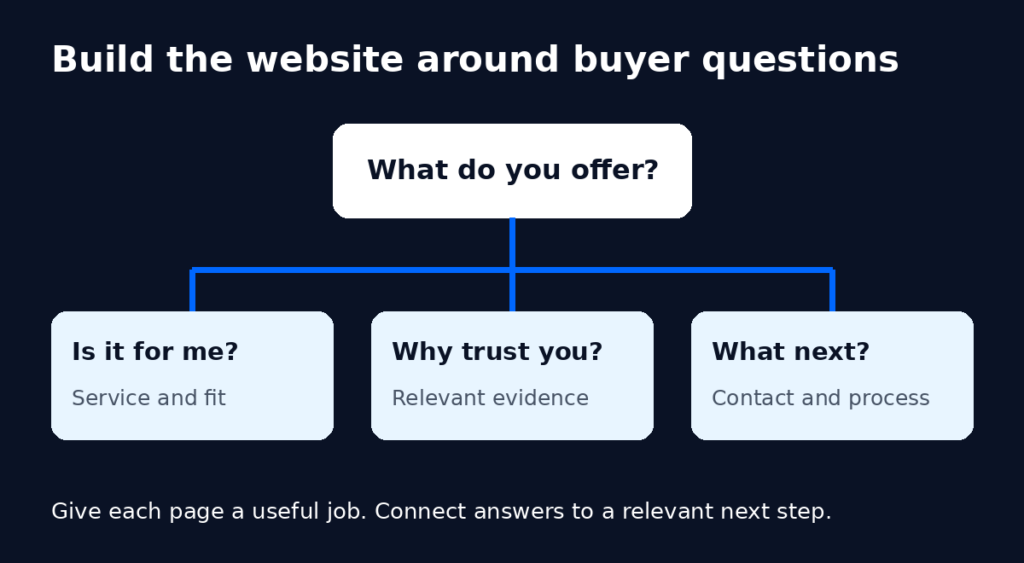
A useful website structure helps visitors find answers and understand the next step. Begin with buyer questions rather than a target number of pages. Your services, sales process and available evidence should shape the map.
Give each page a clear job
Write one sentence describing the purpose of every existing page. A service page can explain fit and scope; a case study can document a specific engagement; a resource can help a buyer prepare. If two pages answer the same question for the same audience, review their overlap before creating another.
Build a small decision map
- Understand: what problem does the business help address?
- Evaluate: what is included, who is it suitable for and what are the limits?
- Verify: what approved evidence supports the explanation?
- Act: where can a buyer discuss the relevant requirements?
This is a planning aid, not a claim that every visitor follows a straight path. Check real inquiry questions and available analytics before treating your proposed journey as established behavior.
Make links useful in context
Use descriptive navigation labels and link text that explains the destination. Connect a relevant article to its service page and connect a service claim to the case study that supports it. Avoid linking every paragraph or using the same vague label for unrelated destinations.
Google’s SEO starter guide explains useful organization and links that search engines can follow. Clear structure supports discovery and comprehension; it does not guarantee rankings or inquiries.
Protect existing URLs during changes
Before moving or merging pages, record the current URLs, useful incoming links and intended destinations. Check redirects, navigation, internal links and sitemap entries after implementation. Changing a page title does not automatically require changing a working URL.
How much detail belongs in the navigation?
Include the choices that help a buyer orient themselves. Supporting explanations can sit on the relevant page. Test whether someone unfamiliar with the business can find a service, supporting evidence and the contact route without being coached.
Reference: Google Search SEO starter guide.
If your page map needs implementation, review our website design scope for service businesses and identify which existing pages and URLs need to be retained.
We’ll assess your current pages and buyer questions, then recommend what to keep, improve or reorganize. The direction depends on your offer and evidence, not a fixed page-count formula. Discuss your requirements.